
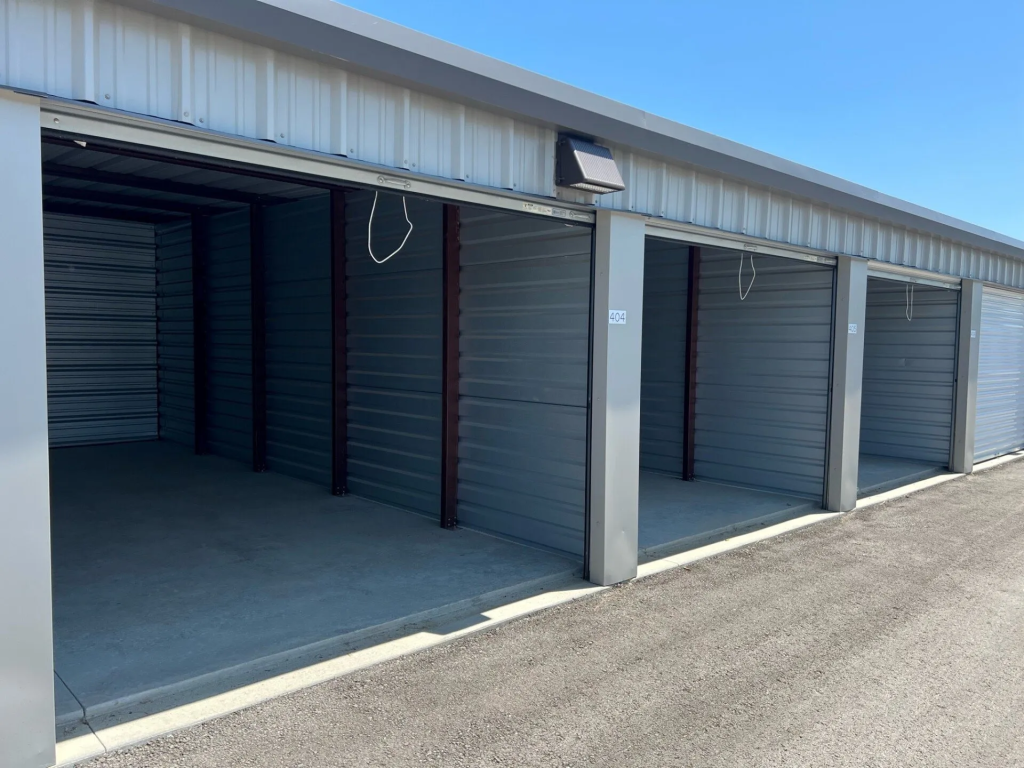
Storage Unit Tips and Tricks: Maximize Space & Protect Your Belongings

When leasing a storage unit, careful planning is key to ensuring easy access to your belongings and preventing damage.
Follow these expert storage unit tips for a smoother experience and to ensure your items remain safe, accessible, and well-organized throughout your lease.
Getting ready for a big move? Check out our full moving guide →
Before You Pack
- Measure the door, not the unit. Square footage is the number people fixate on and the door is the one that ruins moving day. Standard roll-up doors at Kansas City North Storage open approximately 9′ wide by 7′ tall. The 13.5′ x 50′ units open approximately 11′ wide x 14′ tall. If you own an armoire, a tall shelving unit, or a vehicle with a luggage rack, measure it before you reserve anything. Our unit size guide shows each size to scale.
- Make sure everything is clean and dry. This is the tip that prevents the most damage and the one people skip most often. A grill with grease on it, a mower with wet grass in the deck, a patio cushion put away after rain. Any of those will smell like mildew by spring. Wipe things down and let them dry fully before they go in.
- Take photos as you load. Two minutes with your phone gives you an inventory for insurance and saves you digging through the whole unit later trying to remember whether the Christmas lights went in this year.
- Buy more tape than you think you need. Run it across the bottom seam and the corners, not just down the middle. Boxes fail at the corners.
Packing
- Use uniform box sizes wherever you can. Same-size boxes stack square and hold weight. Mixed sizes create a leaning stack that shifts every time you open the door.
- Keep boxes under about 40 pounds. Books and tools go in small boxes, linens and pillows in large ones. A box you can’t lift is a box you’ll never move to get at what’s behind it.
- Label two sides plus the top, and write contents rather than rooms. “Kitchen” tells you nothing when you’re looking at forty boxes. “Kitchen: pots, baking sheets” tells you which one to open.
- For anything soft or fabric, use sealed plastic totes instead of cardboard. Cardboard absorbs humidity and attracts pests. Totes do neither, and they stack better.
- Disassemble what comes apart. Bed frames, table legs, shelving. Tape the hardware in a labeled bag directly to the piece it belongs to, because a bag of screws in a box you can’t find is a trip to the hardware store.
- We keep boxes, tape, padlocks, moving blankets, straps, and DampRid in the office, and we can leave supplies inside your unit ahead of time if you prepay. Details on the storage supplies page.
Loading The Unit
- Get everything off the concrete. Pallets are better than plastic sheeting laid flat. A slab wicks moisture, and sheeting alone can trap condensation against whatever sits on it. Pallets lift your belongings and let air move underneath. If you use plastic, put it under the pallets.
- Heavy on the bottom, light on top. Appliances, tool boxes, and furniture on the floor. Boxes stacked upward from there, heaviest at the base of each stack.
- Build toward the ceiling. Our units are tall enough that stacking properly adds 30 to 40 percent more usable space than a floor-plan estimate suggests. Cheap shelving along one wall pays for itself in a month by letting you rent one size smaller.
- Leave an aisle. If you’ll be in and out, keep a walkway about two feet wide down the center. It costs you roughly a fifth of your usable space and saves you unloading the entire unit to reach one box.
- Put seasonal and frequently used items at the front. Holiday bins, camping gear, and anything tied to a job in progress belongs where you can reach it without moving furniture.
- Cover upholstered furniture with breathable moving blankets, not plastic. Sealed plastic traps moisture against fabric. Blankets keep dust off and let the piece breathe.
- Mattresses store best flat or lightly propped, raised off the floor and wrapped. Standing a mattress on its long end for months lets the internal structure settle unevenly. If you have to stand it up, support it against a flat wall rather than letting it bow.
- Garden tools bundle together or drop handle-down into a clean trash can. Takes up a fraction of the floor space and stops rakes from sliding across the unit.
Storing in Kansas City’s Climate
Every unit at Kansas City North Storage is dry, fully enclosed, drive-up, and non-climate-controlled. Our units are maintained weather tight and we run routine pest control, but you should still pack for the local swing between a 95 degree July and a January in the single digits. You can see the range in the National Weather Service climate normals for Kansas City. Temperature is rarely the real culprit. Moisture is, and most of it arrives with your belongings. The EPA’s guidance on moisture and mold puts the safe range at 30 to 50 percent relative humidity. In a storage unit you get there with a few basics: everything dry going in, DampRid or a similar desiccant refreshed a couple of times a year, pallets underneath, and sealed totes for anything fabric.
Some things belong in a climate-controlled facility instead, and we would rather tell you that up front than have you find out later. Vinyl records, wine, oil paintings on canvas, unbagged photographs, wooden instruments, and medications all do better with controlled temperature and humidity. Furniture, appliances, tools, equipment, business inventory, and sealed household goods do fine here.
Keeping Pests Out
We handle routine pest control and prohibit storing perishables, and the rest is about what comes in your boxes. Never store food, including sealed pantry items, pet food, and birdseed. Vacuum upholstered furniture and shake out linens before they go in. Use sealed totes rather than cardboard for fabric. Skip open bags of soil, mulch, or grass seed. Cedar blocks or dryer sheets in bins with clothing help. Mothballs are worth avoiding, since the smell transfers permanently to fabric.
Locks and Security
- Buy a lock that actually fits. Our latches take a heavy-duty padlock, and we sell ones sized for them with multiple keys. You’re welcome to bring your own. A cheap hardware store lock with an exposed shackle is the weak point in an otherwise secure setup.
- The facility is accessible to current tenants 24 hours a day, seven days a week, through a personal access code or the Storage Genie app, so you never need to roll down the window. Cameras cover the property and the perimeter is fenced and lit.
- Keep the irreplaceable things with you. Cash, jewelry, passports, medical records, prescriptions, legal documents, and original family photographs belong in a safe or a deposit box, not in any storage unit anywhere.
- Your homeowners or renters policy may or may not cover contents in storage, and coverage is required on your lease. There’s more on the storage insurance page.
Vehicles, RVs, and Boats
Prep matters more for vehicles than for anything else, especially over a Missouri winter.
- Fill the fuel tank and add stabilizer before long-term storage, since a partly empty tank collects condensation. Change the oil first, because used oil holds acids that sit in the engine all season. Put the battery on a tender or pull it entirely. Overinflate tires slightly to reduce flat spotting, and cover the tires if the vehicle sits outside.
- For RVs and campers, drain and winterize the water system before the first hard freeze. Leave the fridge propped open. For boats, drain everything that holds water, fog the engine, and cover it properly.
- Wash and wax before it goes away. Bird droppings, tree sap, and road salt left on paint for six months etch it.
- Which space you need depends on the rig. Uncovered parking spaces handle cars, trucks, SUVs, campers, RVs, and trailers up to 30 feet. Boats are not permitted outdoors. Enclosed 13.5′ x 50′ units hold large boats, Class-A motorhomes, and contractor equipment behind a door. Full details on RV and boat storage and vehicle storage.
What Not to Store
Perishables and anything food related. Live plants or animals. Flammables, fuel, propane tanks, paint, or fireworks. Anything hazardous or illegal. Wet items of any kind. Our FAQ has the full prohibited list. If you’re unsure about something, call and ask before you load it.
A Seasonal Check-In
Stop by twice a year, ideally spring and fall. Ten minutes is enough. Replace the DampRid. Look for water marks along the base of the walls or on the floor. Check that stacks haven’t shifted. Swap out what season you’re in, taking the patio furniture out in April and putting it back in October. Pull anything you haven’t touched in two years and decide whether it’s worth another year of rent.
Common Questions
Do I need to put plastic down on the floor? Pallets are better. A concrete slab wicks moisture, and plastic laid flat can trap condensation against the items sitting on it. Use pallets for airflow, and if you want plastic, put it underneath them.
Is it okay to store a mattress on its side? Flat is better for long-term storage. Standing a mattress on its long end for months lets the internal structure settle unevenly. If space forces it upright, support it flat against a wall and keep it off the floor.
How do I keep mold out of a non-climate-controlled unit? Everything goes in clean and dry, use sealed plastic totes instead of cardboard for fabric, keep items up on pallets, and refresh a desiccant like DampRid twice a year. Nearly all storage mold comes from moisture that went in with the belongings.
What size storage unit do I need? Sizes here run from a 10′ x 10′ up to a 13.5′ x 50′. A 10′ x 10′ holds a studio or small one-bedroom, a 10′ x 20′ covers a two-bedroom with appliances, and the 13.5′ x 50′ takes a Class-A RV or a large boat. Use the unit size guide or call and describe what you’re storing.
Can I get into my unit at night? Yes. Gate access is 24 hours a day, seven days a week, with a personal code or the mobile app. Management is available Monday through Friday 8am to 5pm and Saturday 9am to 1pm.
Ready to put these tips to use?
Check availability and pricing online → or give us a call or text 816-410-0704 with any packing and organizing questions.

